Lorem ipsum dolor sit amet, consetetur sadipscing elitr, sed diam nonumy eirmod.
Lorem ipsum dolor sit amet, consetetur sadipscing elitr, sed diam nonumy eirmod.

Charlie
May 20, 2026
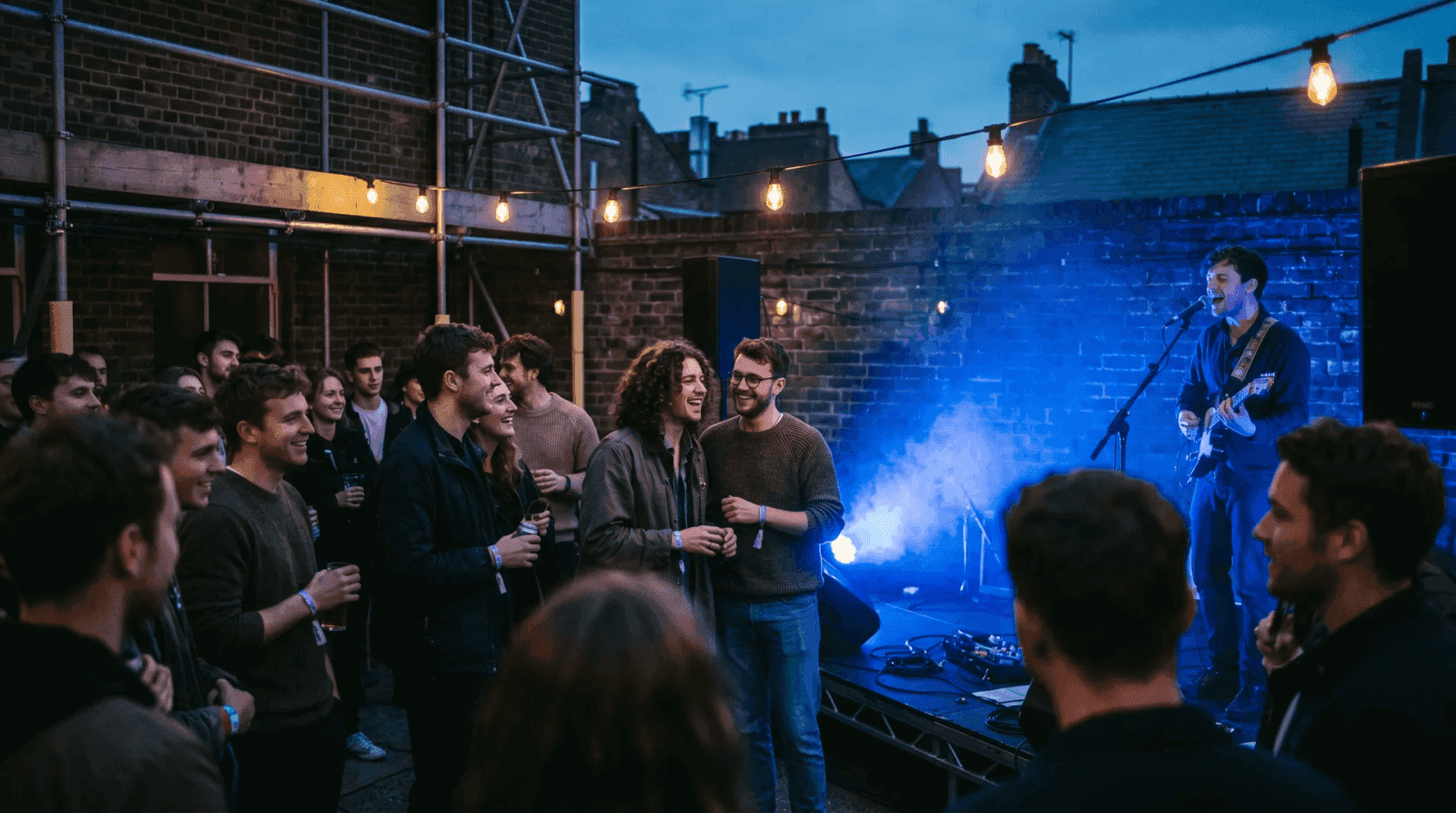
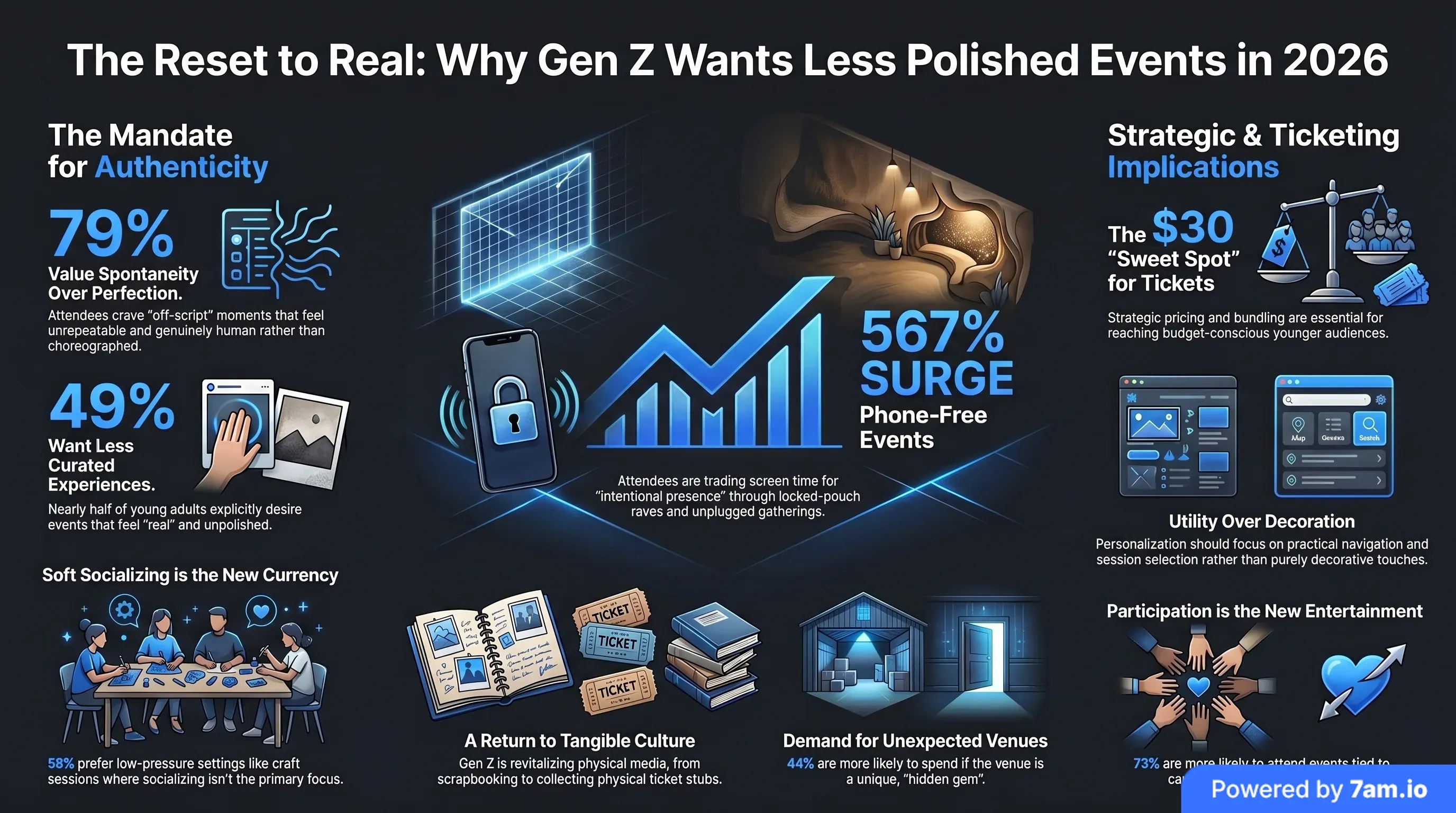
Gen Z wants less polished events because the old event formula feels like content production with a bar tab. In Eventbrite's 2026 Social Study, 49% of young adults said they want events to feel less curated and more real.
That does not mean messy operations. It means fewer staged photo walls, fewer forced networking prompts, fewer moments designed mainly to look good on Instagram. It means events where people can arrive as themselves and leave with something that felt hard to repeat.
Eventbrite calls this the Reset to Real. The signal is not subtle. Young adults still want to go out: 79% of Gen Z and millennials plan to attend more events in 2026. The shift is in what they are buying. They are not only buying access. They are buying a feeling that the room was alive before the camera came out.
For organisers, this creates a useful tension. The experience should feel loose. The system underneath it should be tight. The buyer still needs a clean ticket page, clear terms, fast checkout, and a reason to trust the organiser. If that part breaks, the event feels amateur, not authentic. Our guide to ticket purchase user experience covers the purchase side of that problem.
The Reset to Real is the 2026 audience shift away from over-curated live experiences toward spontaneous, social, local, and tactile formats. Eventbrite describes young attendees as choosing rooftop sessions, block parties, unusual venues, and participatory gatherings over perfect plans.
The practical point is simple. People can get polish anywhere. What they cannot get from a feed is shared tension in a room: the song no one expected, the stranger who becomes part of the night, the small venue that feels like it should not have worked but did.
That is why the trend shows up in odd formats. Eventbrite reported sharp growth in rooftop music sets, silent discos, forest bathing, puzzle competitions, and events that combine unrelated interests. Tagvenue's 2026 report points in the same direction: attendees are placing more value on meaningful moments than headcount.
This also explains why some large festivals are feeling pressure. A bigger stage does not automatically create a better memory. If the event feels expensive, crowded, generic, and hard to enter, younger buyers start looking for smaller rooms with more control. That thread sits behind our article on why festivals are struggling.
Phone-free events grew 567% globally because presence has become rare. When everyone records everything, the unrecorded room starts to feel valuable.
Eventbrite's phone-free research frames this as part of a wider analog era. People are not rejecting technology in every part of life. They are rejecting the feeling that every social moment has to be captured, checked, and posted.
For organisers, phone-free does not have to mean locking every device in a pouch. It can mean phone-free dancefloor zones, no-filming sets, printed programmes, analog photo booths, stamp cards, wristbands, or ticket stubs that people want to keep. The point is to create a boundary that attendees can understand before they buy.
The ticket page has to carry that boundary. If the event is phone-free, say it clearly at checkout. If recording is banned for one act but fine elsewhere, say that too. A surprise rule at the door creates friction. A clear rule before payment creates consent.
This is where a ticketing platform does quiet work. 7am can help organisers put the promise, rules, pricing, and entry notes in one place instead of scattering them across social posts. That matters because the buyer is deciding whether the room feels worth trusting.
Soft socialising is an event format where the activity carries the social pressure. People can connect, but they do not have to perform being social the whole time.
Eventbrite's research found that 58% of attendees prefer low-pressure environments where socialising is not the main focus. That explains the rise of book clubs, puzzle nights, craft sessions, walking groups, listening events, and small workshops.
This is useful for organisers because it widens the audience. Not everyone wants a networking room. Not everyone wants a dancefloor. Plenty of people want a reason to leave the house without being forced into a loud social script.
The ticketing implication is bigger than it looks. A soft-social event should not sell itself with vague hype. It should tell buyers the format, group size, run time, host role, noise level, and whether solo attendees are normal. A solo buyer should not have to guess whether they will feel strange arriving alone.
That is also why community-building and exclusivity need care. A small event can feel special without becoming closed-off or cliquey. The useful version is covered in our guide to must-attend event strategy.
Micro-events are not better by default. They are better when the organiser needs depth, repeat attendance, and stronger community signals instead of raw headcount.
Tagvenue's 2026 report says 63% of planners report rising demand for intimate gatherings with 20 to 100 attendees. That is not a tiny niche. It is a format shift. Smaller rooms let organisers design the exact social contract: who the event is for, what people do when they arrive, how they participate, and what memory they take home.
Micro-events also reduce the risk of bland programming. A 70-person listening party can have a sharper identity than a 3,000-person event that tries to appeal to everyone. A workshop in a gallery can create better attendee data than a broad festival activation where half the room never interacts with the organiser.
Still, small events need proper commercial structure. If capacity is capped, every missed checkout hurts. If the event has a waitlist, that waitlist needs to become a signal for the next date. If the format repeats monthly, attendee data becomes the growth engine. Our article on attendee data ownership explains why that data belongs with the organiser.
Design the event around one clear behaviour you want from the room. Do not start with decor. Start with what attendees should do, feel, or share.
A less polished event still needs a deliberate spine. For a phone-free gig, the spine might be presence. For a rooftop session, it might be discovery. For a puzzle night, it might be low-pressure connection. For a local block party, it might be neighbours meeting without a formal networking pitch.
Once the spine is clear, strip out anything that fights it. If the promise is low-pressure, do not add loud host games every ten minutes. If the promise is analog, do not make the only map a QR code. If the promise is secret-lineup energy, make the ticket page confident enough that buyers do not feel tricked.
Here is the working checklist:
| Design choice | What it tells the attendee | Ticketing implication |
|---|---|---|
| Phone-free zone | This moment is for the room | Put recording rules before checkout |
| Small capacity | Access is limited for a reason | Use visible capacity or waitlists |
| Activity-led format | You do not have to force conversation | Explain the run sheet clearly |
| Unusual venue | The location is part of the memory | Add arrival, access, and entry notes |
| Tangible keepsake | The night continues after the exit | Use ticket stubs, wristbands, or post-event offers |
That last row matters. Marketing-Interactive's coverage of Gen Z fandom points to a return to physical culture: gigs as social hubs, physical media, and identity objects people can keep. A ticket can be more than a QR code if the event gives it meaning.
Ticketing should make the event easier to trust without making it feel corporate. The best ticket page for a real-feeling event is direct, specific, and calm.
Start with the promise. A buyer should know whether they are buying a phone-free listening session, a low-pressure social night, a tiny venue takeover, a community workshop, or a secret lineup event. The more unusual the format, the more concrete the ticket page needs to be.
Then make pricing match the format. A $30 ticket may work for a casual Gen Z social format, as the NotebookLM data table flagged from the source set. A limited phone-free performance may support more if the value is obvious. A small recurring community event may need early-bird pricing so the organiser knows whether to add another date. Our guide to successful ticket prices goes deeper on that decision.
The mistake is copying a festival ticket page for a social-club event. The buyer questions are different. They want to know: Can I come alone? Is this awkward? What happens when I arrive? How many people will be there? What should I bring? Can I leave early? Will I have to talk to strangers?
Answer those questions before payment and conversion improves without discounting. If checkout still drops, fix the purchase path before blaming the concept. Our piece on increasing ticket conversions covers that side.
Measure whether the event created repeatable demand, not whether it looked good in a recap reel. Real-feeling events often create value in signals that generic marketing reports miss.
Track repeat buyers. Track waitlist demand. Track solo attendance. Track referral purchases. Track which ticket tier sold first. Track whether phone-free rules reduced complaints or increased attendee satisfaction. Track which post-event email got replies rather than just clicks.
This is the part that decides whether the trend becomes a business model. A one-off analog night is nice. A repeatable format with attendee data, waitlists, and clear pricing is an asset.
For larger organisers, this also changes marketing. If your event is built around participation, your best content may come before and after the event, not only during it. Explain the ritual before tickets go live. Share the artefacts afterward. Let people see that the room had rules, texture, and a point of view. Our guide to social content that drives ticket sales is the natural next step.
Gen Z does not want worse events. They want events that feel less like a production brief and more like a night they were actually part of.
The organisers who win in 2026 will pair that feeling with tighter systems: clear ticket pages, honest pricing, clean entry, useful attendee data, and follow-up that respects the community. That is where 7am fits. The event can feel real because the machinery behind it is doing its job.
Explore More
View All