
Lorem ipsum dolor sit amet, consetetur sadipscing elitr, sed diam nonumy eirmod.
Lorem ipsum dolor sit amet, consetetur sadipscing elitr, sed diam nonumy eirmod.

Sarah
May 3, 2026
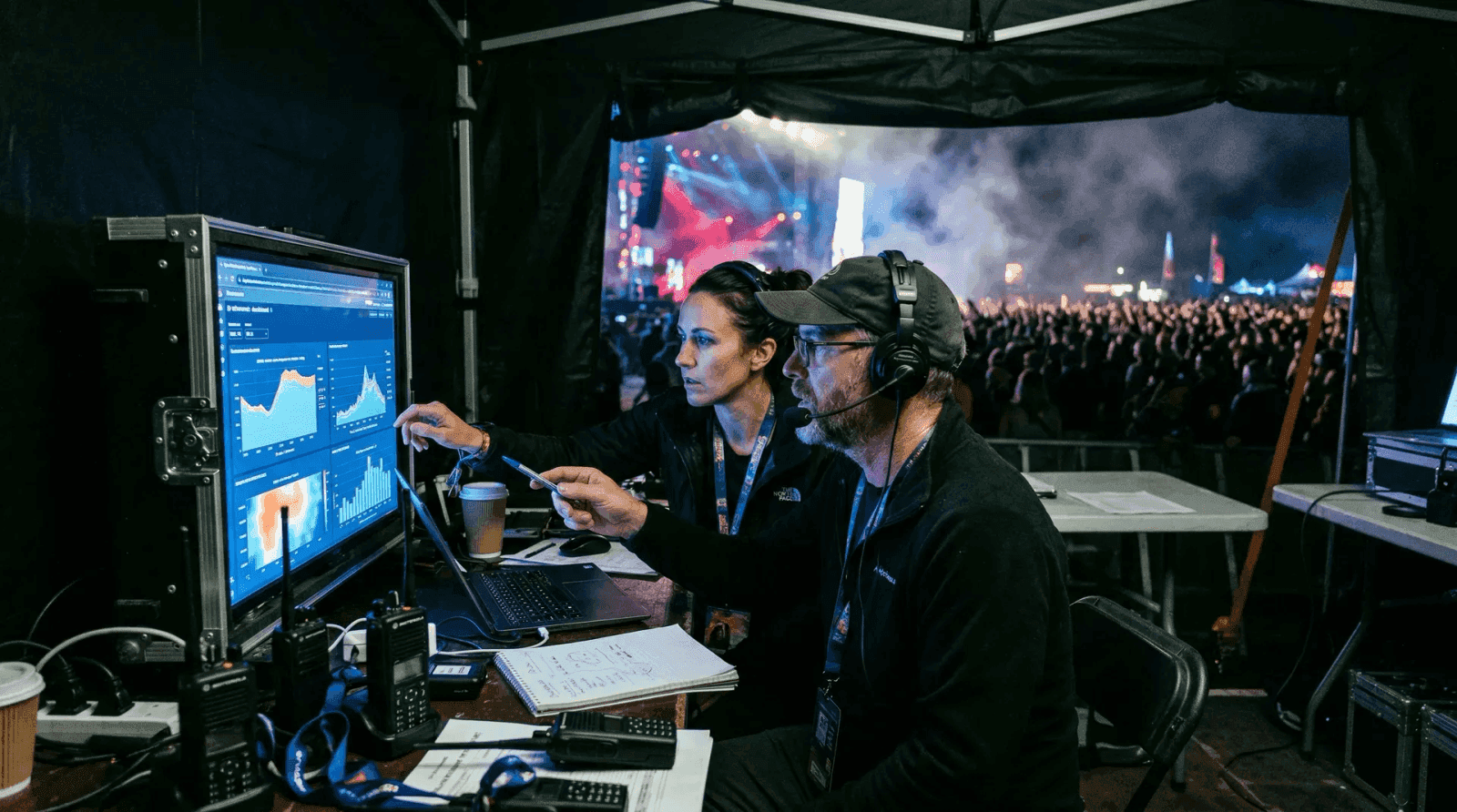
You own every name, email, purchase record, and demographic detail collected when someone buys a ticket to your event. You can export it whenever you want, in whatever format you need, without asking permission.
Most organisers have never tested this.
If you're not sure whether your platform passes this test, read about the ticketing mistakes most organisers make. Then log into your ticketing platform right now. Export your full attendee list as a CSV. Do you get email addresses? Does it include buyers from more than 90 days ago? Can you pull it through an API into your CRM?
If any of those checks fail, you don't own your data. You're renting it.
A 5,000-person festival running annually builds a list worth tens of thousands of dollars in remarketing value over three years. That value sits inside your ticketing vendor's database and disappears the moment you switch providers. Platforms like 7am, Ticket Fairy, and Tixr make ownership explicit through real-time exports, open API access, and contractual terms confirming you are the data controller.
You pay to acquire the same audience twice. Every single year.
A promoter running a 300-cap venue in Christchurch spent $2,800 on Facebook ads for their second annual gig. Their ticketing platform had every buyer's email from the first event, locked behind a premium tier they hadn't paid for. That $2,800 bought attention they already had.
Without your own data, you can't build lookalike audiences on Meta or Google. Can't segment last year's VIP buyers for an early-bird offer. Can't run a referral programme because you have no list to seed it with. Ticket Fairy's 2025 organiser report found referred customers are 4x more likely to purchase and exhibit 37% higher retention. Activating referrals requires a list you control.
Then there's platform risk. Your ticketing provider changes their pricing, gets acquired, shuts down. Your audience goes with them. This isn't an abstract governance checkbox. It's insurance against losing your most expensive marketing asset overnight.
Owned data turns a one-time ticket sale into a marketing engine that gets cheaper every year it runs.
Remarketing to past buyers. Upload your attendee email list to Facebook Ads Manager and create a Custom Audience. Your cost per reach drops from dollars to cents. Run an early-bird campaign to last year's full list before you spend a dollar on cold prospecting.
Building lookalike audiences. Facebook and Google can model your best customers and find thousands of similar people in your target region. The ones who bought VIP, referred friends, came back three years running. No list, no lookalike.
Segmentation. Send a different message to the person who bought a $45 GA ticket in the final week versus the person who bought a $180 VIP pass three months early.
Referral programmes. Festivals using built-in referral systems see a 15-25% lift in ticket sales. Some events sell one in every four tickets through fan referrals. You can't seed a referral programme without a list you own.
Post-event feedback. Survey within 48 hours while the experience is fresh. Segment by ticket type. What did VIPs value? What did GA buyers want more of? This feeds directly into next year's programming.
The Christchurch promoter who spent $2,800 on Facebook? With a 3,000-person email list, that campaign costs under $50 through Mailchimp. That's the compound difference.
Sponsors in 2026 don't pay for logo placement on a stage banner. They pay for measurable audience engagement.
IEG's sponsorship outlook projects global spending to double by 2030. The money is moving away from organisers who pitch "estimated 10,000 attendees" and toward those who show up with a report card.
A festival using RFID wristbands and a unified data pipeline can give sponsors verified unique visitor counts to their activation area. Average dwell time at their booth. 4.7 minutes is worth more than 1.2 seconds of a walk-by. Demographic breakdowns by age, home city, ticket type. Attribution data proving attendees who visited the sponsor's activation spent more at F&B.
A festival relying on a locked-down platform that doesn't share data? They're pitching with guesswork. Guesswork loses budgets.
When two festivals of similar size pitch the same sponsor, the one with the data report card wins. Every time.
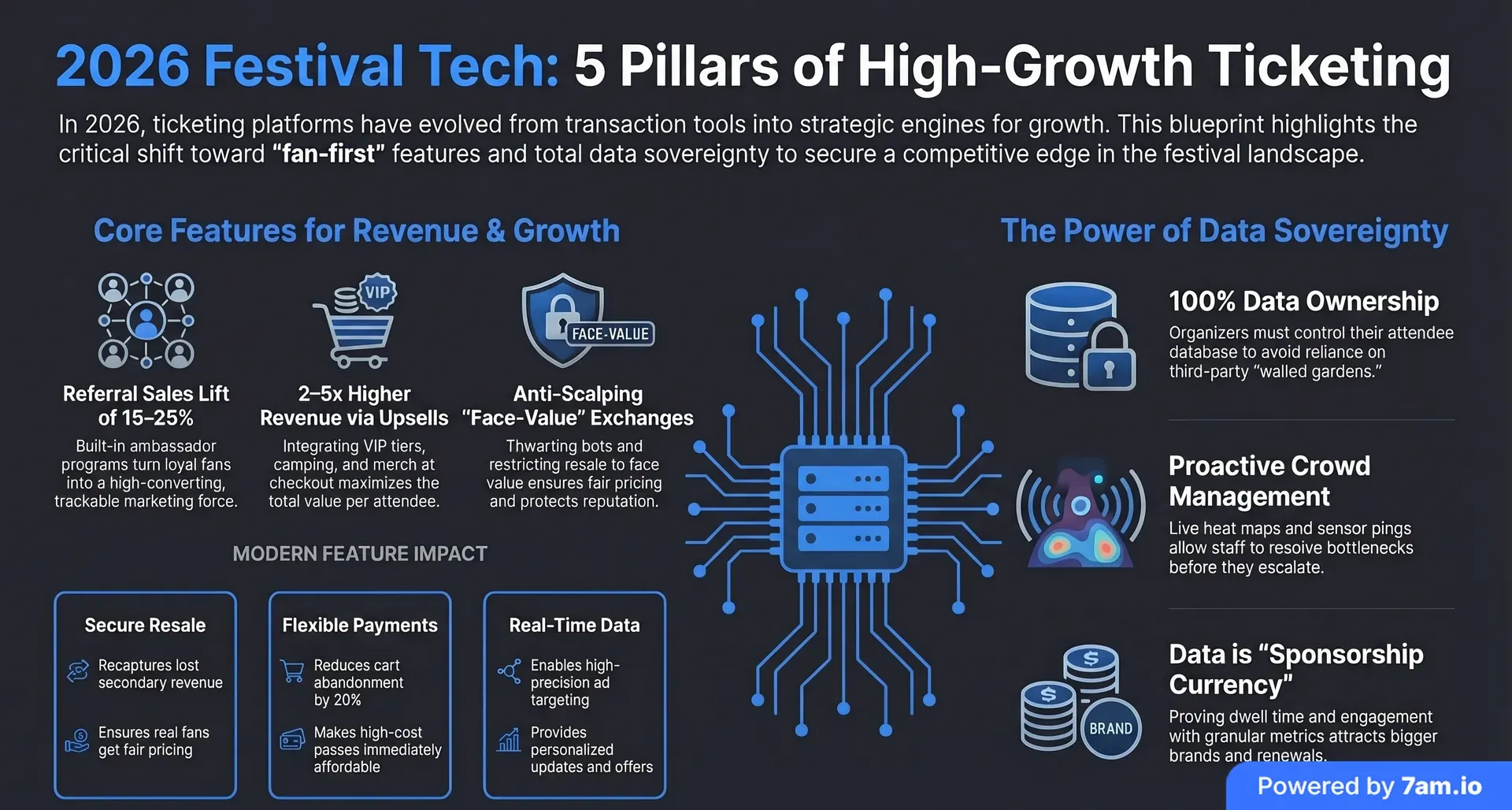
Some platforms hand you the keys. Others charge extra for them.
7am gives real-time access to your full attendee database. No premium tier required. Export anytime, any format.
Ticket Fairy provides on-demand CSV and API exports. One-click integrations with Mailchimp, HubSpot, and Zapier. They retain your data even after the contract ends.
Tixr gives full control with no third-party gatekeeping.
Eventbrite allows CSV exports. But the platform cross-promotes competing events to your attendees through their marketplace. Advanced analytics and API access sit behind higher-tier plans.
Many legacy platforms restrict exports to recent orders, strip contact details from downloads, or require you to email support to get your own data. If you need to email someone to access your own customer list, that's a red flag.
Before signing with any platform, ask this in writing: "Can I export every attendee record, including emails and phone numbers, at any time, in CSV format, even after my contract ends?" Anything other than an unqualified yes means keep looking.
You don't need to switch platforms tomorrow. Start with an audit.
Export everything you can right now. Download every attendee list, order history, and analytics report your platform gives you. Save it somewhere you control.
Check what's missing. Name, email, ticket type, purchase date, amount paid. If any of those fields are blank or restricted, that gap costs you money every time you run ads instead of sending an email.
Ask the hard question. Email your ticketing provider: "Who is the data controller for attendee records collected through our events? Can we export all records including emails at any time? What happens to our data if we leave?" Save their response.
Build a parallel list. Registration form on your website. Pre-event survey. WhatsApp group. Any channel where the email goes into your system, not theirs.
Evaluate before your next on-sale. Switch between events, not during one.
Lineups change. Venues get replaced. But an audience you own and can reach directly, year after year, compounds in value every time you use it. If you're still handing that asset to someone else's database, you're paying rent on something you should own outright.
Your attendee data is your event's most valuable asset. The platform you sell tickets through determines whether you own it or rent it. Organisers who own their data spend less on marketing, close bigger sponsor deals, grow faster. It's one of the three structural levers of event profitability. Every event builds on the last one. And with 57% of tickets selling in the final week, remarketing to past attendees is the only reliable way to drive early sales instead of starting from scratch. Festivals that rented their audience data instead of owning it are among those shutting down in 2026.
Check your platform's data policy today. If you can't export your full attendee list right now, it's time to move. And while you're auditing your platform, check whether it's pushing you toward dynamic pricing that erodes fan trust.
Explore More
View All